Friday, 24 September 2010

Of we go...

The coming two weeks will be ‘field work’ for us. We travel to Germany and Denmark to learn more about the realization of renewable energy landscapes. In the first week the main subject will be: Energielandschaften!? Fallen oder Chancen für ländliche Räume (Energy landscapes!? Failures or chances for rural areas). In the second week we will go to Samsø (DK). This is a good example of a realized renewable energy region. We try to talk to a various people here which have something to do or to say about the switch to a 100% energy self-sustaining area and their opinion about this. On the website of the Samsø Akademi there is available a lot of information about this ‘project’. http://www.energiakademiet.dk/default_uk.asp


When back in the Netherlands, we hope to have a new chapter for our book: Building 100% Renewable Energy Regions for Dummies...!


Monday, 20 September 2010

The European Context

In our research the European context of (100%) renewable energy landscapes plays a very important role. There are positive and negative differences in the realisation of renewable energy projects between the EU member states. This is underlined by a trip to Germany I made last week.

I went to Bundesland Brandenburg, historically famous for its energy production by brown coal. This is a process which is till going on in these days and leaves big marks in the landscape. Although this practice is not a very sustainable way of producing electric energy and therefore get lots of critics, the practices are still going on in these days. In Brandenburg there is also another change going on, a change towards a more sustainable way of producing electric energy and well by wind turbines. About 60 wind turbine parks are realized and produce renewable energy. Also the solar panels market is good developed and everywhere you see houses with solar panels on their roofs. This is not only the case in Brandenburg but also in the rest of Germany. The German government has stimulated this solar energy market very much during the last years. This has resulted in a success story. Member of the German Bundestag (Parliament), Mr. Hermann Scheer (often mentioned as the European Al Gore) explains the reasons for this success in the Dutch Tegenlicht documentary of April the 12th 2010 (Available on http://tegenlicht.vpro.nl/afleveringen/2009-2010/de-groene-transitie/de-groene-masterclass.html). Mr. Scheer presents his story not only by scaring us with doom scenarios about enormous environmental problems caused by the use of fossil and nuclear power but he puts the renewable energy sector into a new light. Renewable energy production is very economically profitable. An interesting point of view and we are triggered to find out more about this.

I’d like to conclude with a movie of the German energy company RWE: Energieriese.

http://www.youtube.com/watch?v=rhMV0e_cFAI


In the movie RWE shows some of the current day methods of energy production in a fairy-tale way. That it is in real life maybe not such a happy ending story is reflected by the critical reactions on this movie. But the critics that only 15% of the electric energy in Germany in 2008 is produced by renewable energy sources (Greenpeace) gives the people in the Netherlands something to think about (in the Netherlands the percentage of electric energy was 7,5% in 2008. The amount of renewable energy in the total energy use was 3.4% of the total energy use in 2008. Source: CBS http://www.cbs.nl/NR/rdonlyres/9BD7922E-03BC-412E-92F3-EA13DFAD4FD1/0/2008c89pub.pdf).

The question which remains for the Netherlands: how come the developments towards a more sustainable way of producing energy are going so slowly? We hope to find an answer on this question within the next coming months.
Wednesday, 8 September 2010

The research continues…

We have used energy for centuries, for millennia, for lots of thousands years…
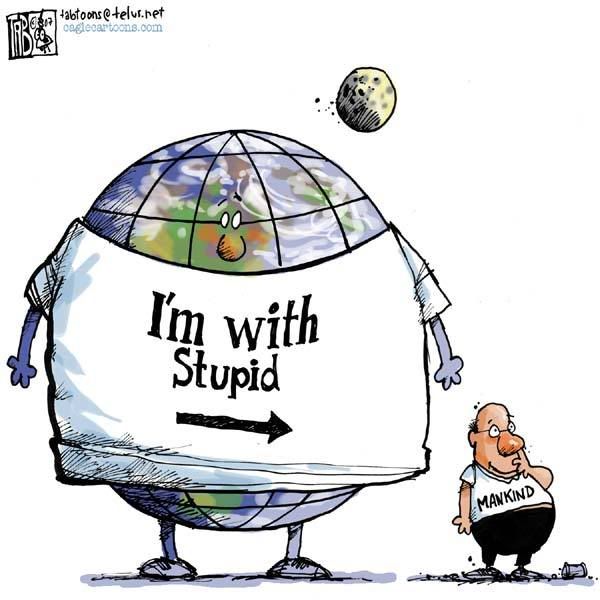
The use of energy developed in the last century in a fossil fuel addiction (gas, oil, coal), we can not live without it. Maybe we want to stop, maybe we want to cut back our consumption pattern, but at this moment we can't live with or without it.

But now the time has come for a rehabilitation process. It will be hard work, but if we really try we can do it! Step one is recognition of the problem, and face the problem. The second step will be a transition from the old to the new situation.

Maaike and I hope to guide this process of recognition and transition by evaluation of good processes in other countries. At this moment we prepare a trip to Denmark (Samsø) and Sweden (Gotland). Both islands have walked the line, and don’t use fossil fuels any more. Samsø and Gotland are renewable energy islands and are fully relying on wind, solar power and biomass. These can be an example and inspiration for the Netherlands. A comparing study of the process and physical appearance for the landscape will offer valuable information for the challenge.

Please stay in touch, and if you have questions, please feel free to ask!